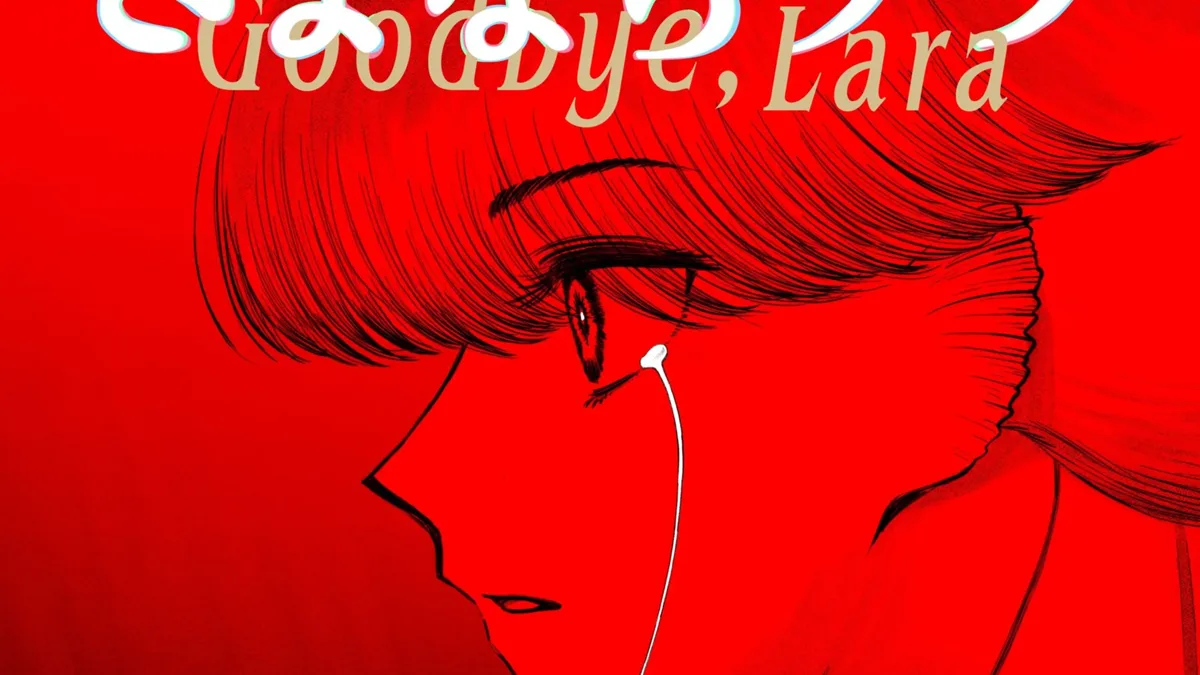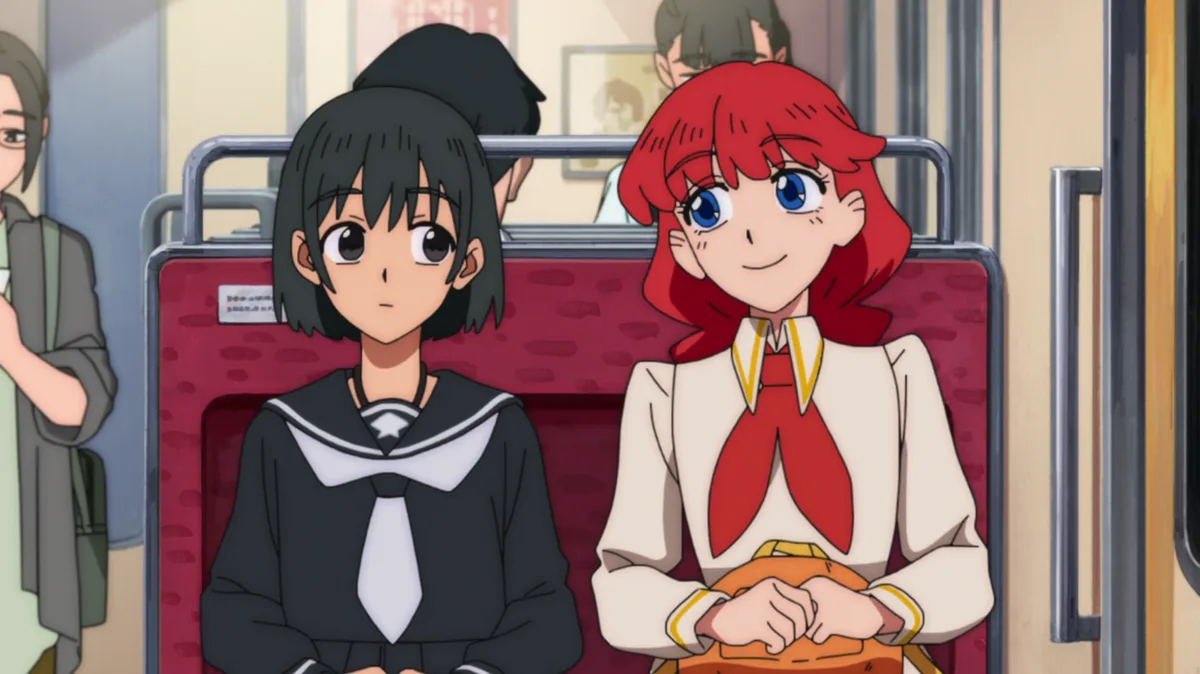
There are a lot of elements that make Goodbye, Lara the standout anime of the Summer 2026 season. It utilizes more analog methods of 2D animation, swimming against the tide of the past few years. It’s saturated with detail, both in its visual and narrative storytelling. Its central focus is on the relationship between two girls. And its ending is quite peculiar, opening itself up to a wave of interpretations. Goodbye, Lara took me on an emotional ride, and as I reached its startling conclusion, I was left with the intense urge to make sense of it all, especially with its exploration of queerness.
Since she was born, the red-haired and curiosity-filled mermaid Lara has been told she’s the next in her family’s lineage to possess the light power needed to keep her kingdom afloat. All she needs to do to trigger this light is find true love — but when she seeks it from the humans above water, her family vehemently opposes it. So goes the little mermaid’s story: she sacrifices her voice to her witch aunt Grace for a chance to reach the surface, falls in love with a human prince, gets betrayed by him, dissolves into sea foam…and then wakes 200 years later. In her absence, Lara’s kingdom has gone dark, and Grace has put her family into temporary slumber to keep them alive. Now, Grace offers Lara one more chance to find love and save her kingdom — and when Lara takes it, she’s launched back into the human world, in 2026 Shiga prefecture, and right into high schooler Mari Otsu’s life.
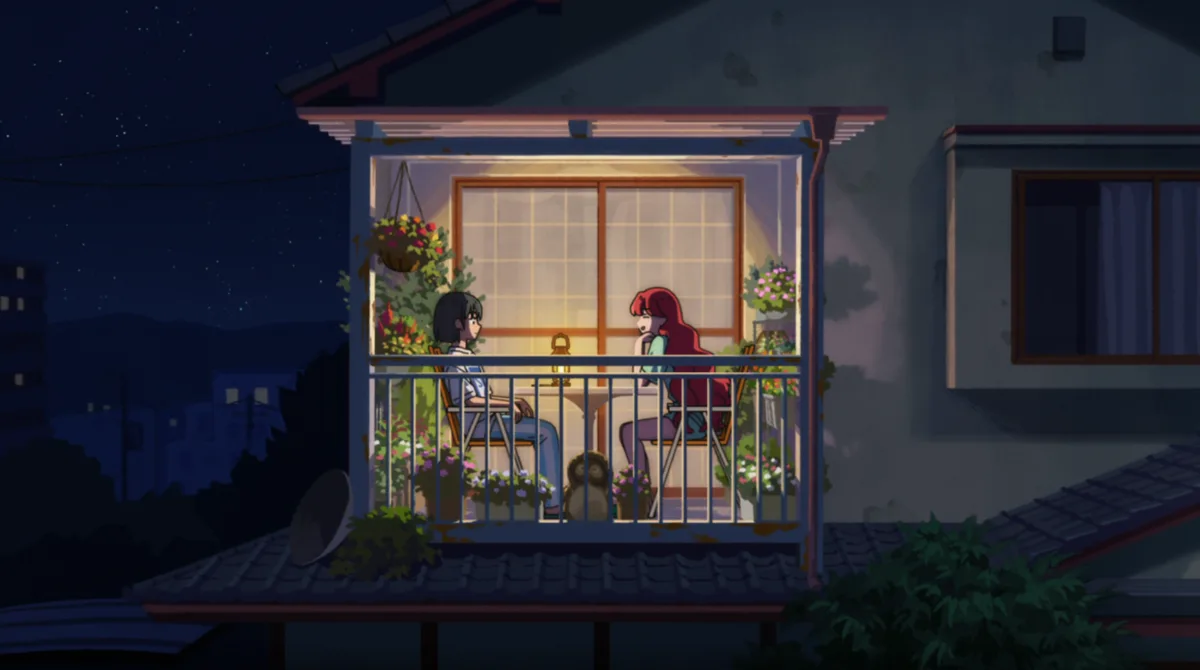
Though Goodbye, Lara is an original anime, it’s one that came with a lot of expectations, especially with wanting a defined romance between the two main leads. The backstory behind Hans Christian Andersen’s original The Little Mermaid, as well as director Takushi Koide’s previous lesbian-coded projects, definitely set the stage for these expectations. I can’t deny my own anticipation for this outcome after witnessing Lara and Mari’s hysterically silly meet-cute in episode 1.
But it became pretty clear to me halfway through the show that it wasn’t going to pan out like a typical coming-of-age romance. Mainly because — and this is something I wish were different — there just wasn’t enough time spent with Mari in the middle chunk of the show. Mari gets a strong introduction as the first human who meets Lara where she is, as she is. She’s diligent in working toward her goals as a boxer, and though her nonchalance may stem from her loneliness after her mother’s passing, it’s also her own way of motivating people to listen to their inner voice instead of relying on an outside opinion. She’s the piece that locks in the climax of this show — but in episodes 4 to 7, her presence in Lara’s life isn’t as much of a central focus as I’d hoped.
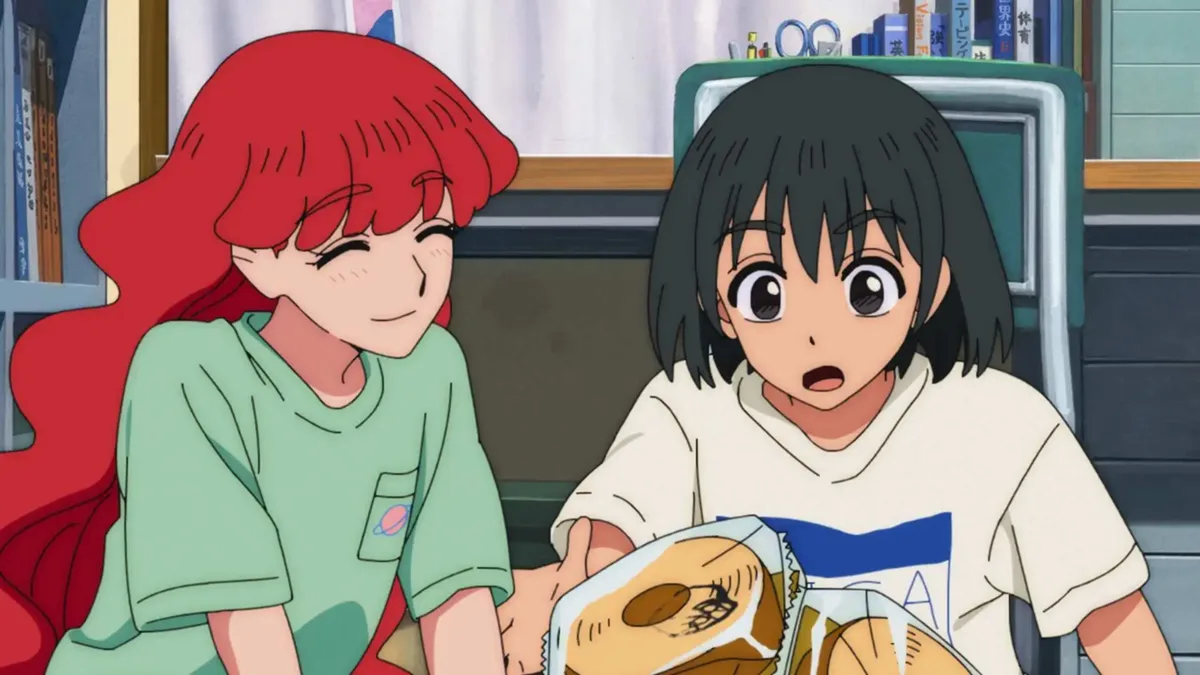
For Lara’s personal development, this choice makes sense, but knowing how special the show paints her and Mari’s relationship, it’s a bit disappointing that we don’t see more of their interactions. Mari’s still there for the adventure, but with that adventure being Lara’s coming-of-human tale, there isn’t much of a joint struggle that bonds them more than they already are. In those middle episodes, Lara is taking in all she can about modern human conventions, from chatting with Mari’s classmate about school and romance to getting a big-girl job at a bakery. These expectations around romance, education, and financial stability are unfamiliar to her, but they are commonplace to Mari, as well as to us as viewers. With the anime’s limited runtime, it would’ve been nice to consolidate some of Lara’s exploration of these societal norms to make room for innovative moments of discovery for both main girls. Whether those moments led to a romantic outcome or not, I think that would have made the climax of this show have a more resounding impact.
Queer Allegory & Conclusion
This is not to say that their relationship as it is, and this story as a whole, isn’t queer. Lara’s titanic fish blade of desire emerges from Lake Biwa right after she hears Mari say she likes people like Lara! As the potion begins to wear off and her heart flails to find an answer with Luca, Lara repeatedly envisions Mari when she thinks of the answer to her desires! Though it’s not defined as explicitly romantic, the love that Lara finds with Mari is deeper than that she’s experienced with anyone else, and it would be willful ignorance to brush past all the deliberate moments where the anime paints Mari, and the world she welcomes her into, as Lara’s true love.
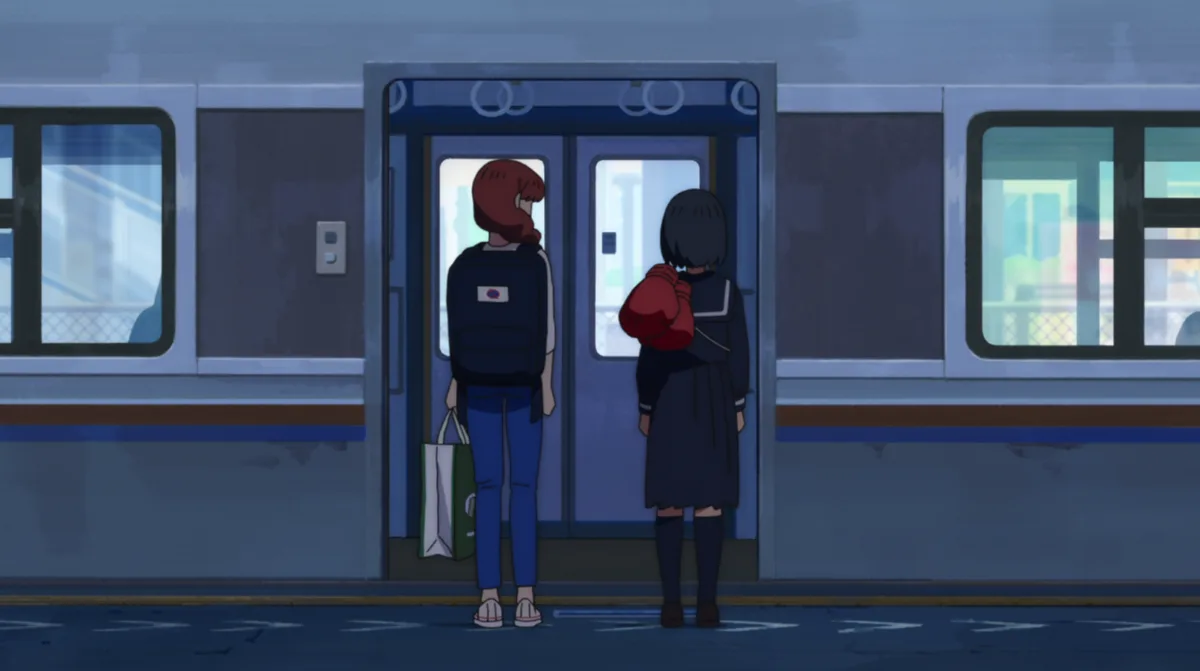
The queerest part of this show, in both meanings of the word, is its ending. I can’t say when I first watched the last five minutes of episode 12 that I understood it, or even liked it. It felt extremely jarring to end with Lara leaving Shiga prefecture behind, when just a bit earlier in the episode, she defines what true love means to her for the first time because of all she’s experienced there. And the leave feels definitive; she tells Mari and Luca that she’s not coming back anytime soon, uncertain about her reason for leaving but unwavering in her decision to do so. Why make such a decisive departure?
Then again, there’s something to be said for how real that feeling is: finally figuring out who you are, but not knowing what to do now that you have. Lara has felt immense pressure her entire life to find love, not only to continue her family line but to keep her entire kingdom afloat. Even when she finds an ally in Grace and takes the potion to become human, true love is a condition she must achieve to “earn” her desired form. Now, she’s found her answer to love, and the urgency is gone. But to her family, the path she sought to find love, this beautiful bright light that moves her, still isn’t the correct one — and, as she tells Lisa before departing, she’s put the duty on herself to prove to them that it is.
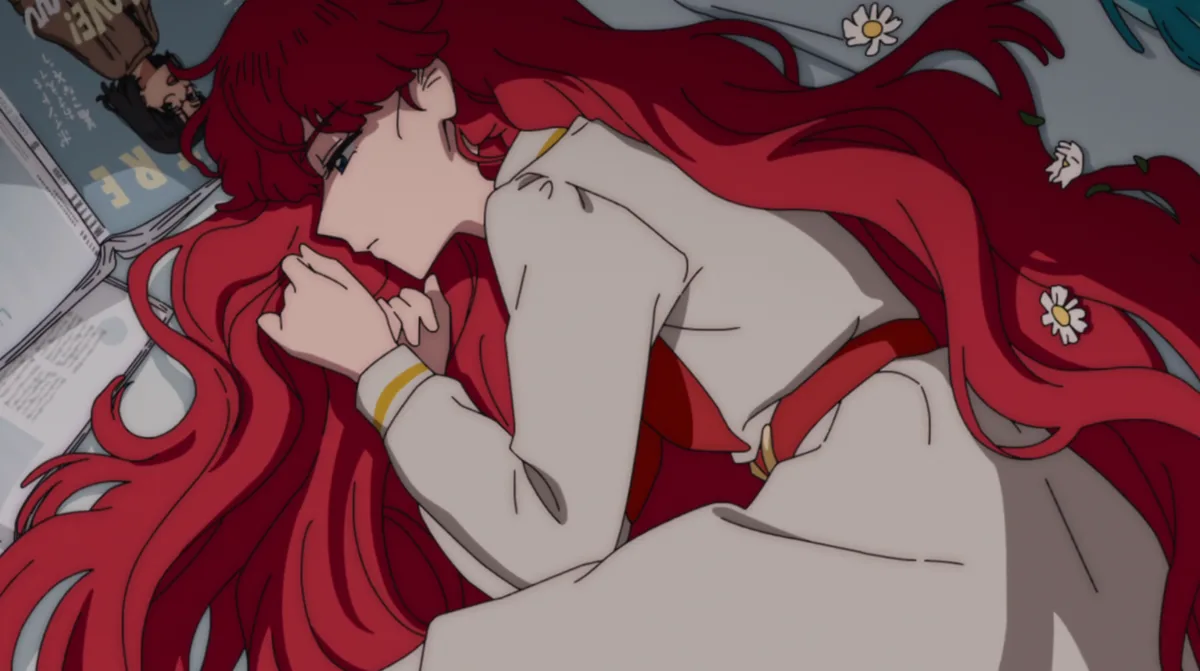
There’s also the fact that Lara’s love did kill Mari, even if she was able to resurrect her in the end. That’s a heavy burden in itself, to witness yourself hurt the most beautiful thing in your life. With all that’s transpired, Lara must sense that there are still more answers for her to discover, both about how to take on this new life and how to do so without hurting people in the process. Lara’s departure, to me, is an action that follows the same line of thought as her conversation with Grace in episode 3: I realized I can’t just depend on others forever. I don’t want to cause any more trouble for anyone, especially Mari.
I don’t know if Lara made the right choice in leaving — but I do understand that sometimes you do what you feel you need to do in that moment, whatever it is, to come to terms with the path you’ve embraced. Regardless of how things progressed between the main leads, the ending of Goodbye, Lara reads as a queer allegory to me, because even once you discover your truest self, you still have to face the world with it — and the world Lara lives in, the world we live in, is not always kind to these self-discoveries.